In the territories that indigenous communities call Abya Yala, the concept of love as Europeans understand it did not exist before 1492. And yet deep emotions were bound to communal life, rooted in the conviction that everything is connected: bodies, nature, cycles of time, and ancestors. The isolated subject of Western thought does not exist in Andean thought: bonds arise not from individual choice but from interdependence—the certainty that life is only possible within a web of mutual care that sustains and reproduces collective existence. Mynerva grounds Volveré y seré millones in this cosmological inheritance, quite literally absorbing myths—and potential futures—of resistance into the architecture of the space. A massive clay wall with embedded bits of organic matter and terra cotta shards meets visitors as they enter the gallery. Redirecting the customary flow of the exhibition space, Mynerva’s installative intervention summons the Andean legend of Inkarri: the last Inca who was dismembered and buried beneath the earth. According to this story, his body regenerated in the soil, spawning seeds of resistance that, when he rises again, will ultimately restore order to a fraught and violent world, reinstating common values interrupted by the ravages of colonialism. The myth is not only a story of the past but a model for the present—a framework for understanding how communities sustain themselves, and one another, in the face of forces designed to dispossess and divide.
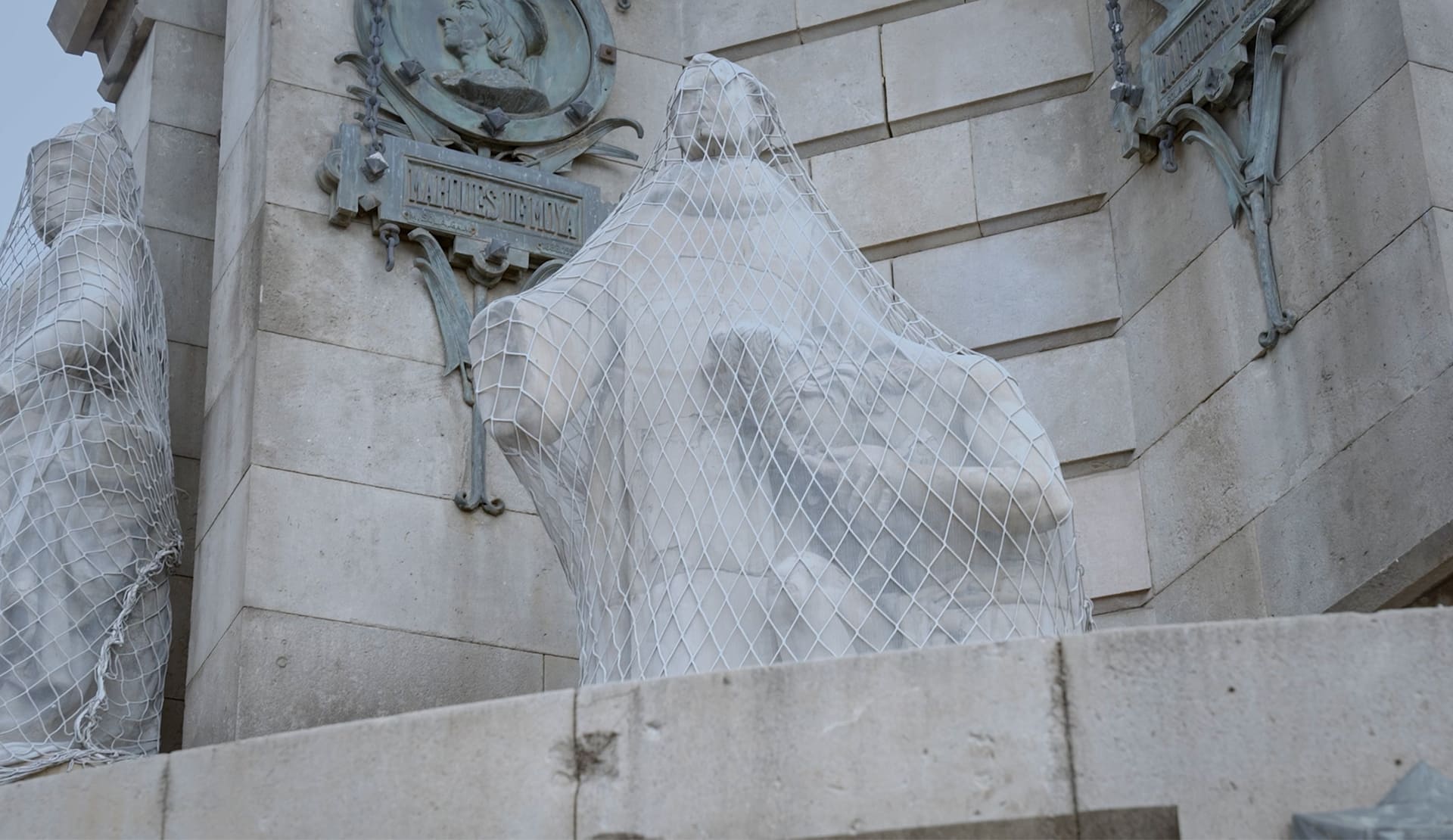
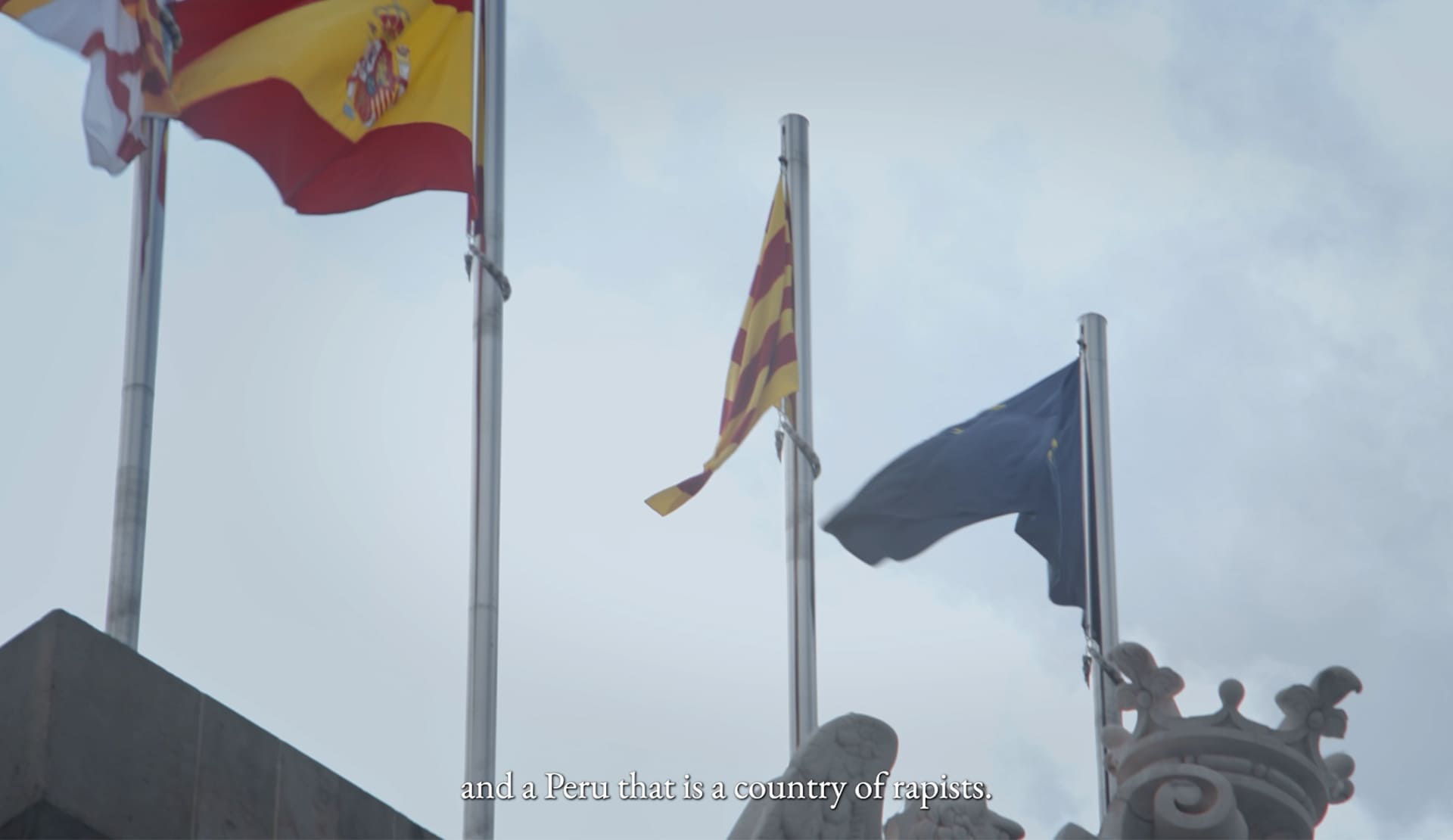
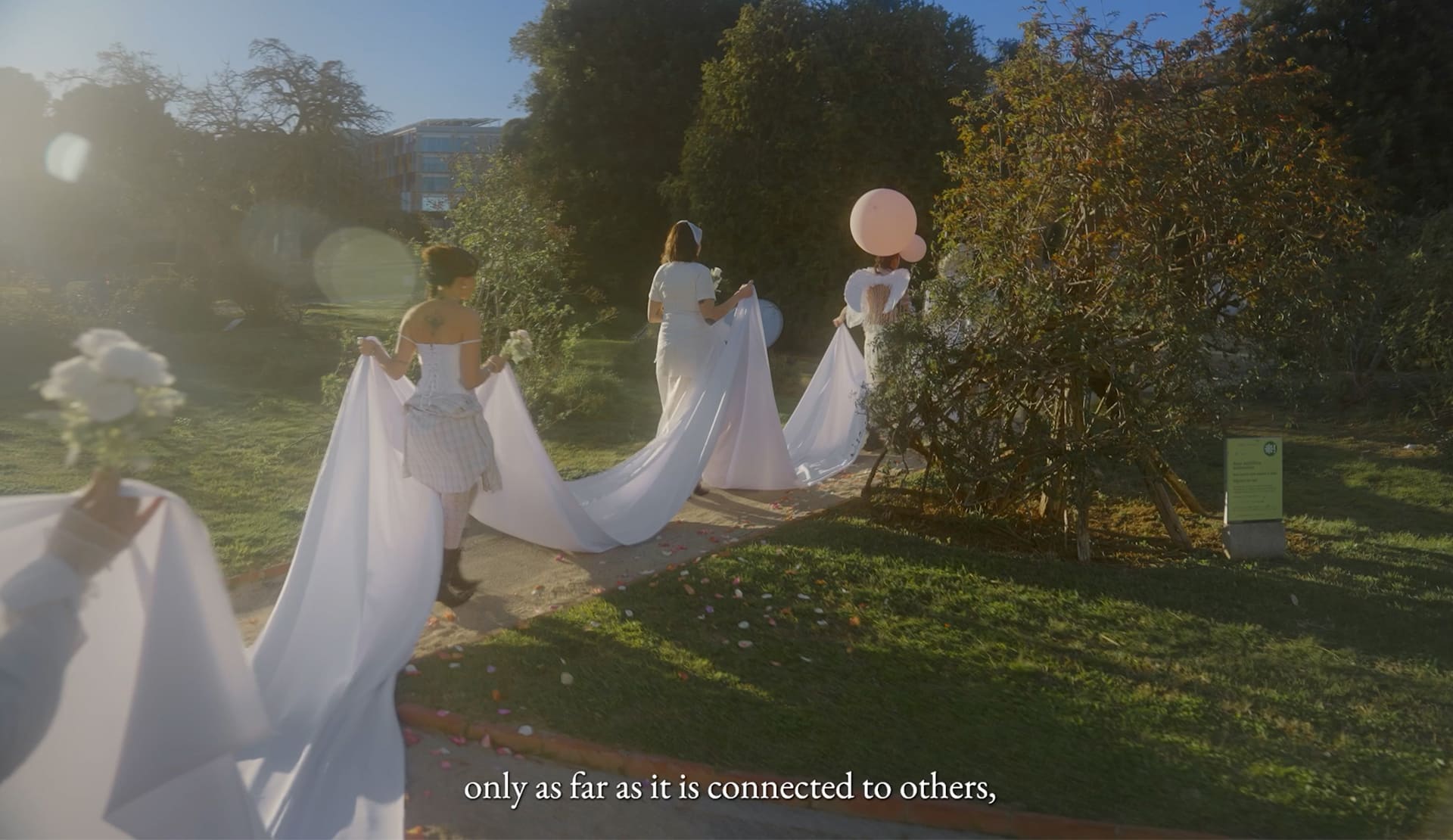
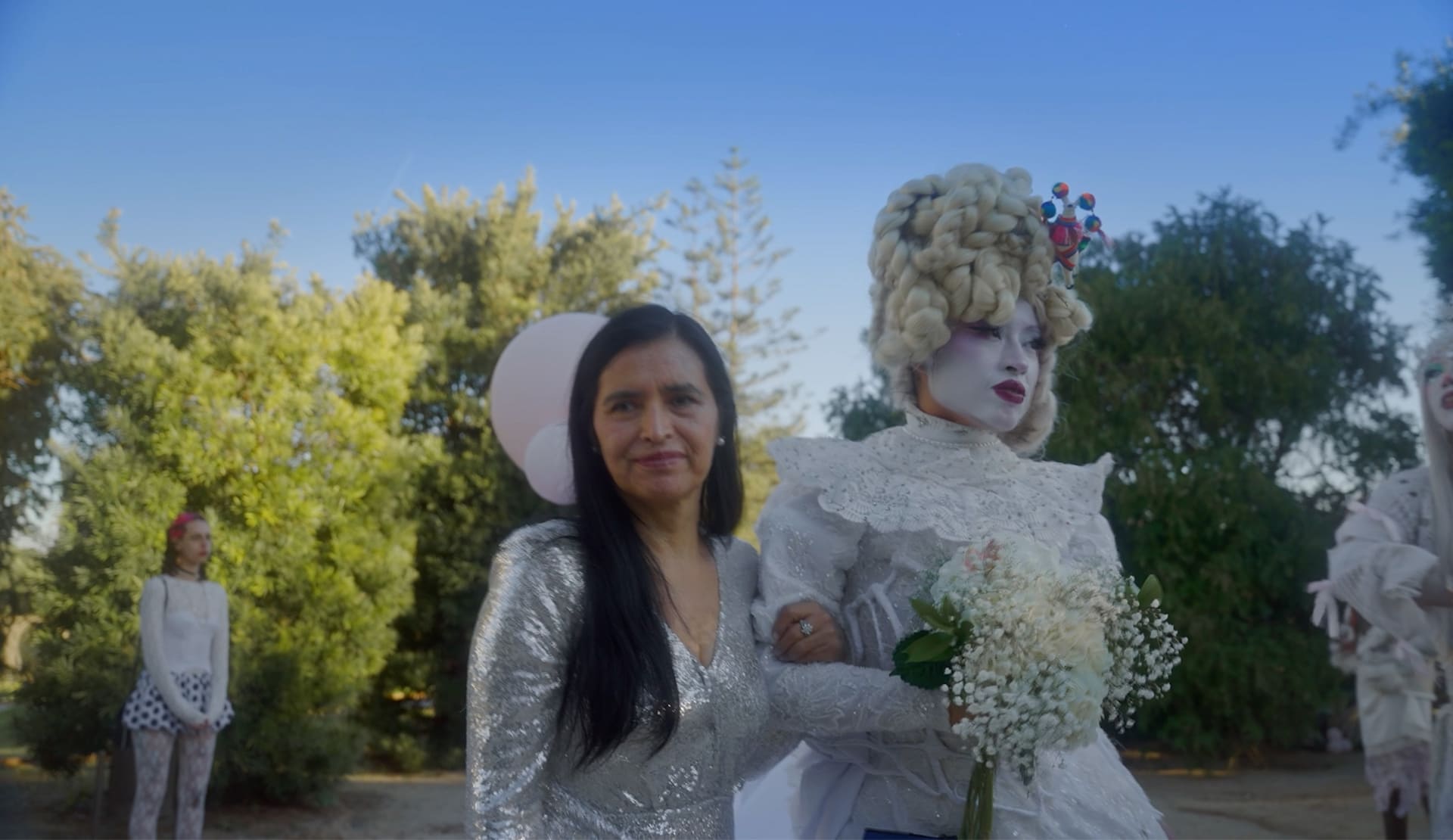
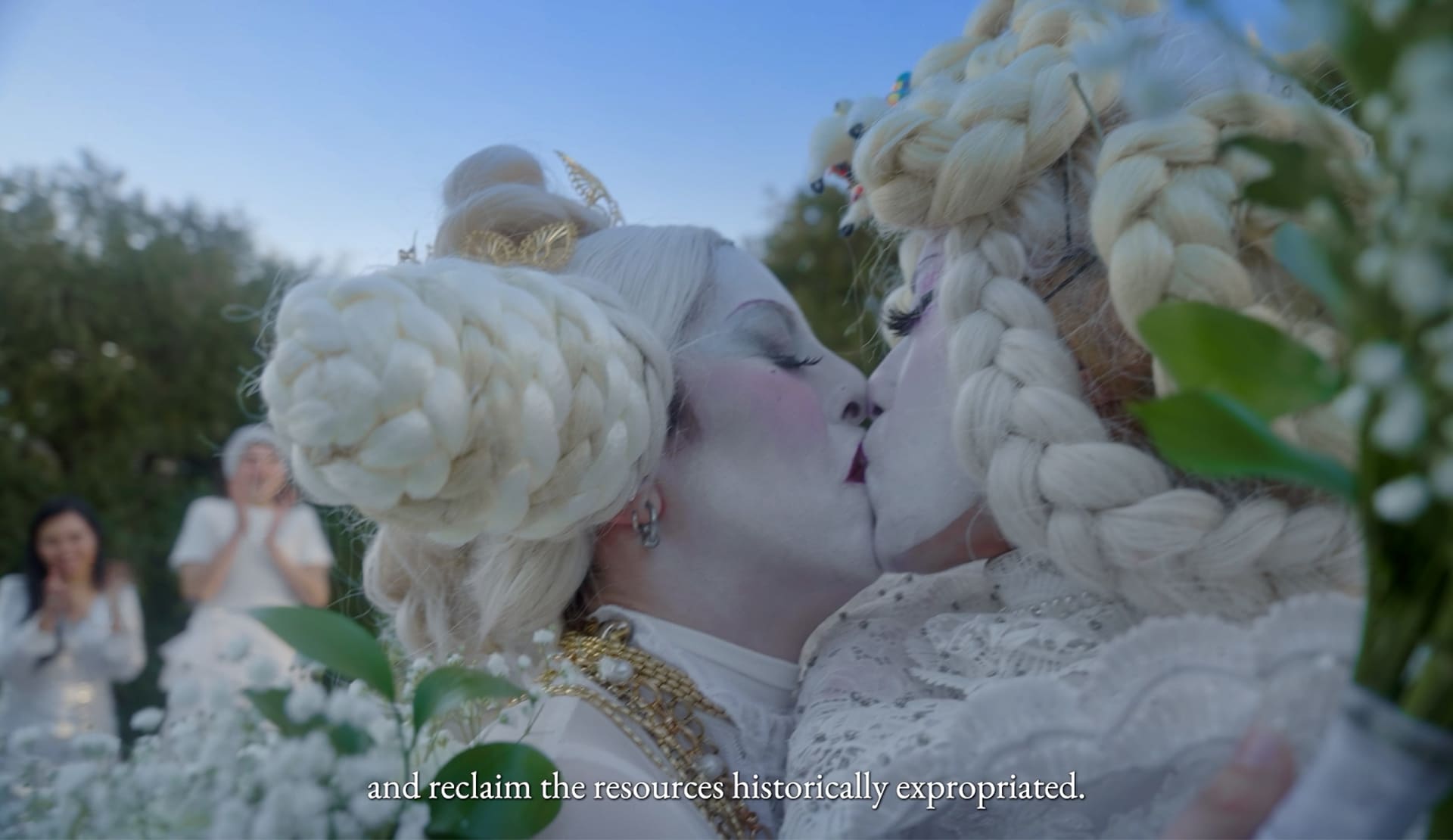
El amor en tiempos de colonialismo is structured as a set of wedding vows between a couple bound together by forces beyond romantic love. In their union, Wynnie and Michi represent, as citizens of Peru and Spain, two sides of the colonial encounter—and the wedding itself serves as an act of reparation. Theirs is a marriage of convenience in the most expansive sense: a strategic mobilization of a legal institution to navigate the bureaucratic violence of immigration and citizenship regimes. Wynnie and Michi share vows that extend beyond their individual bond to engage broader questions of colonialism, human rights, and belonging, framing love not as private feeling but as a collective practice and form of political commitment. In her canonical book All About Love: New Visions (1999), bell hooks argues that love is an ethic of care, commitment, and responsibility fundamentally incompatible with the patriarchal, capitalist, and colonial structures of domination that organize Western life. To love, in hooks’ framework, is always already a political act, a sentiment echoed in Michi’s vow that loving brings “radical tenderness” to a world that “wants us to be alone, precarious, sick, and undocumented.” Traditionally a mechanism for regulating bodies, property, and bloodlines along racial and class lines, marriage for Wynnie and Michi is reimagined as a site of collective repair and a rewriting of the terms of belonging.
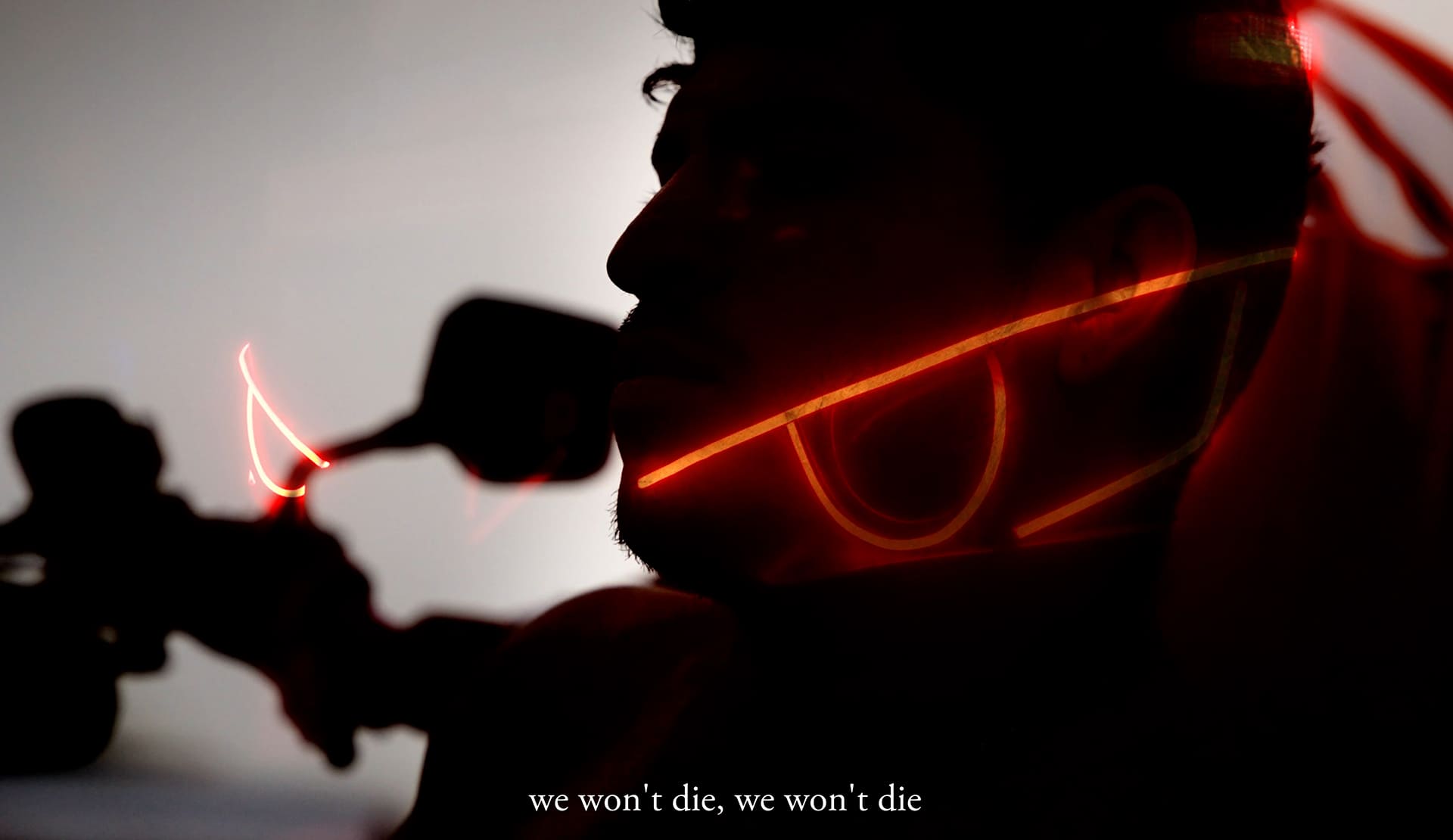
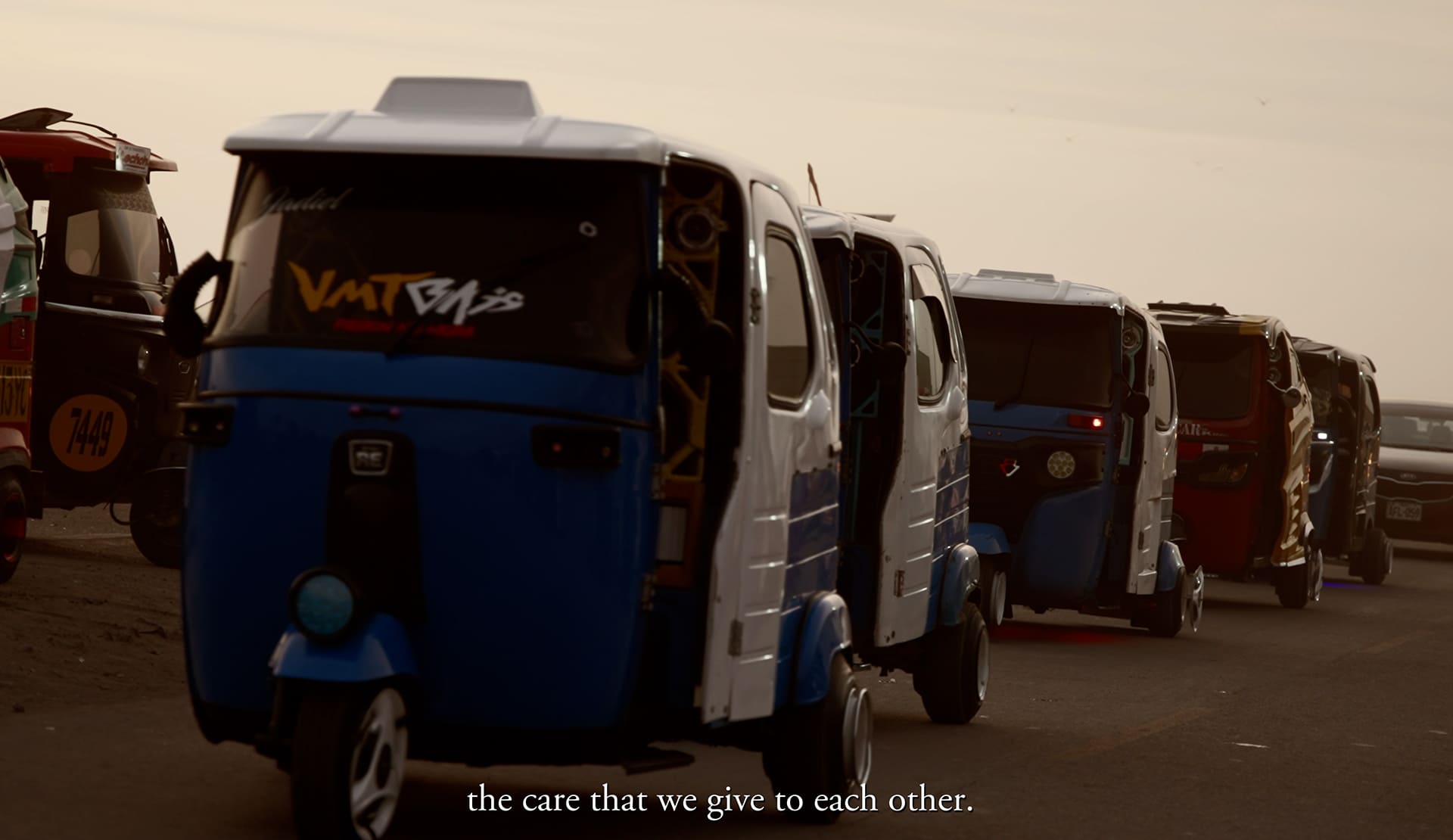
Vivir al Sur opens in black and white. Mototaxis, a common form of transport in areas underserved by conventional public infrastructure, weave through city streets while vendors tend their stalls. A subdued, documentary tone pervades the first half of the video. Opening with an older man driving, shot from behind, the narration adopts the tone of an imagined letter from a father to his daughter—a meditation on social mobility, poverty, rising fuel prices, and the expropriation of resources that shapes life in Lima’s southern districts. The father’s voice persists throughout, turning at times to the networks of care that sustain him and his fellow mototaxi drivers. Then night arrives, and with it, color: neon light illuminates young men racing unsanctioned circuits through the darkness. As dawn breaks, we encounter a convention of transformed vehicles, mototaxis blazing with airbrushed characters, brilliant paintjobs, and stickers. The exuberant imagery attends to what passes between the men gathered here: the texture of an affection that expresses itself not only through fundraisers and mutual aid, but also through speed, through showing off, through the rituals of collective pride and care. The stark contrast between the film’s black-and-white opening and its vibrant, color-saturated conclusion is not a simple movement from hardship to pleasure, but a fuller portrait of what survival looks like—and what it makes possible.