DUST IN LOVE
In Dust of Love, their inaugural exhibition with the gallery, Mynerva delves into one of humanity’s oldest fabulations—love. Transforming the gallery into an immersive textile installation, they present a series of paintings that probe the traditional foundations of love and reconfigure normative conceptions of the body and sexuality. Describing the act of painting as a “living process” and a “document of thinking and feeling,” Mynerva utilizes the pictorial medium to defy and transcend the semantic boundaries of Western theories about love, exposing the fundamental absence on which they rest.
A large oil painting provides the focal point of the exhibition—a narrative exploration of love through multiple scenes charged with desire and surrender. Mynerva’s representation of love draws upon their personal experience of the legacies of colonialism and the Catholic faith in Peru, expanding on the artist’s ongoing critique of how religious dogma and colonial interference govern the experience of sexuality, desire, and the body.
Multiple encounters unfold across the central canvas. One scene depicts sexual union, reframed by Mynerva as a myth—“a desperate attempt to become one.” Another vignette showing a body dwelling within a larger, translucent form evokes the philosophical idea of love as inscription, a shaping and imprinting of an individual’s identity. A figure infatuated with its own reflection alludes to the canonical allegory of Narcissus, while two bodies, facing each other, engage in a spoken exchange of affection and love. With its allusion to the compositional logic of the Old Masters, the painting’s poly-narrative cosmos offers an alternative interpretation of love as a collective, cathartic event that carries anguish, despair, and illusion. By applying deeply evocative visceral and emotional motifs, Mynerva fractures Western narratives about love not as a means of depicting how the traditional dramatic register of romance shapes our social lives, but rather to expose an inherent absence—emphasizing how the rhetorics of love function as a structure of lack.
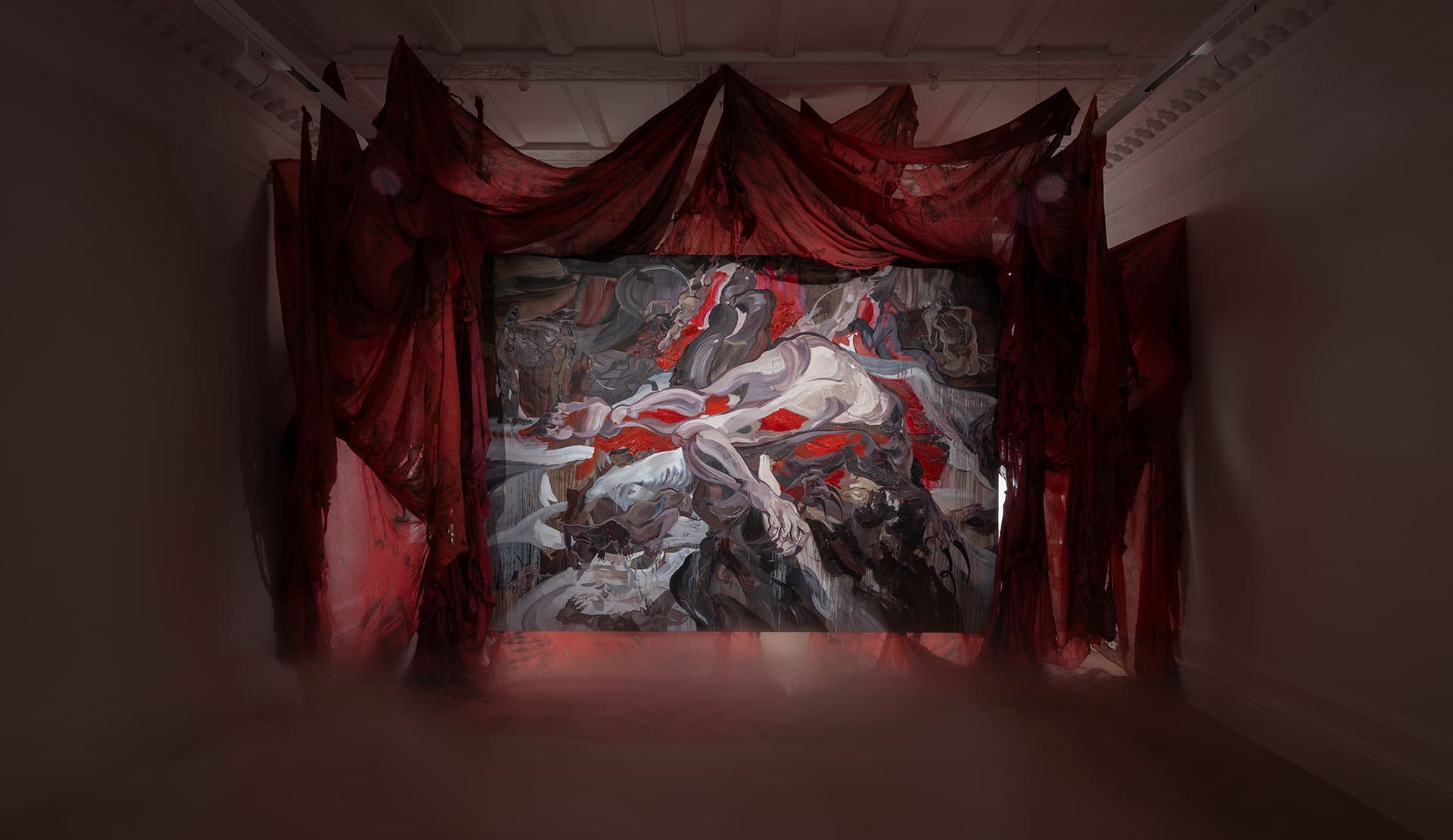
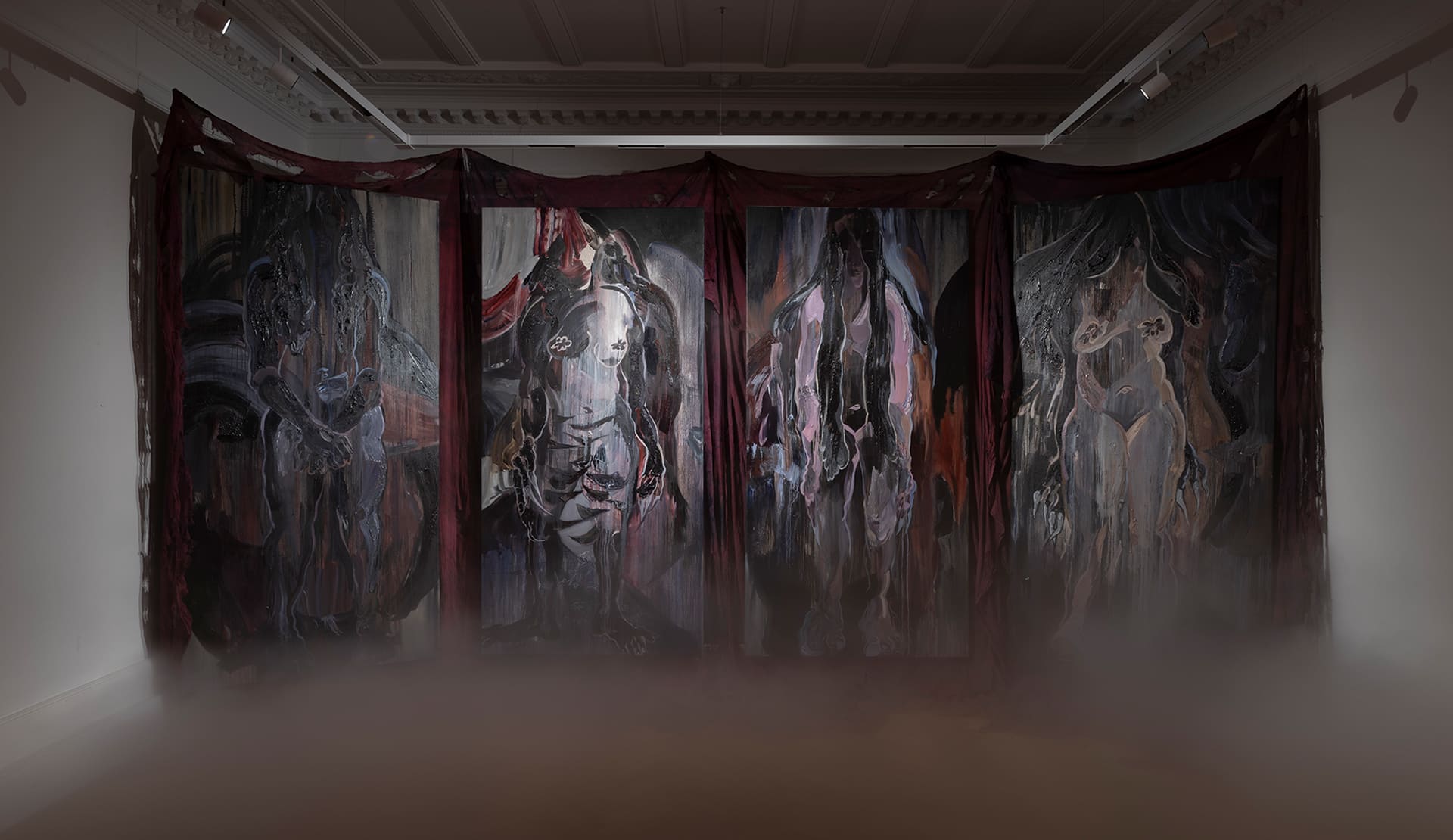
Installation view at Societe Gallery, Berlin.
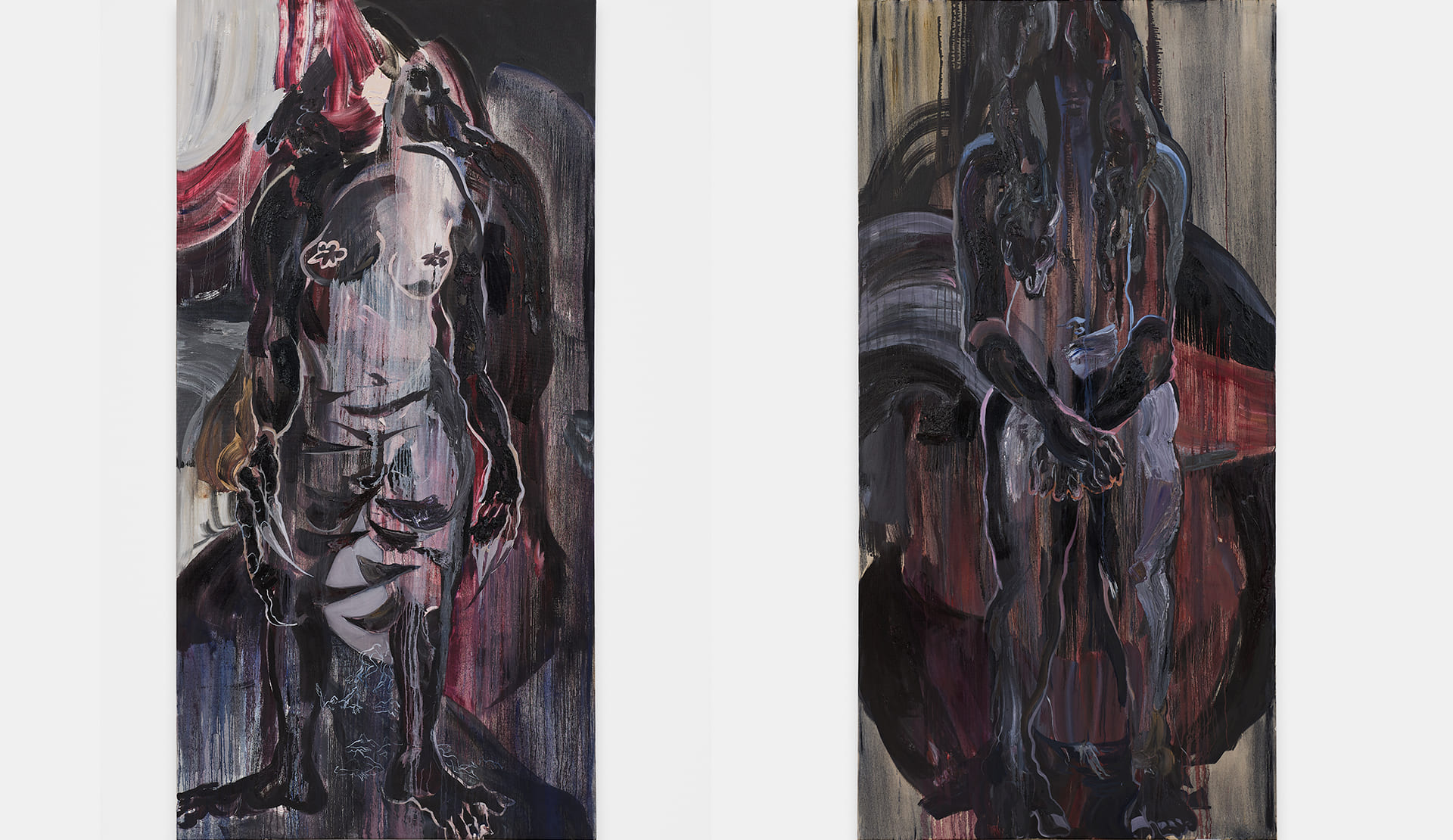
Witness I, 2025, oil on canvas, 267 × 133 cm.
Witness II, 2025, oil on canvas, 267 × 133 cm.
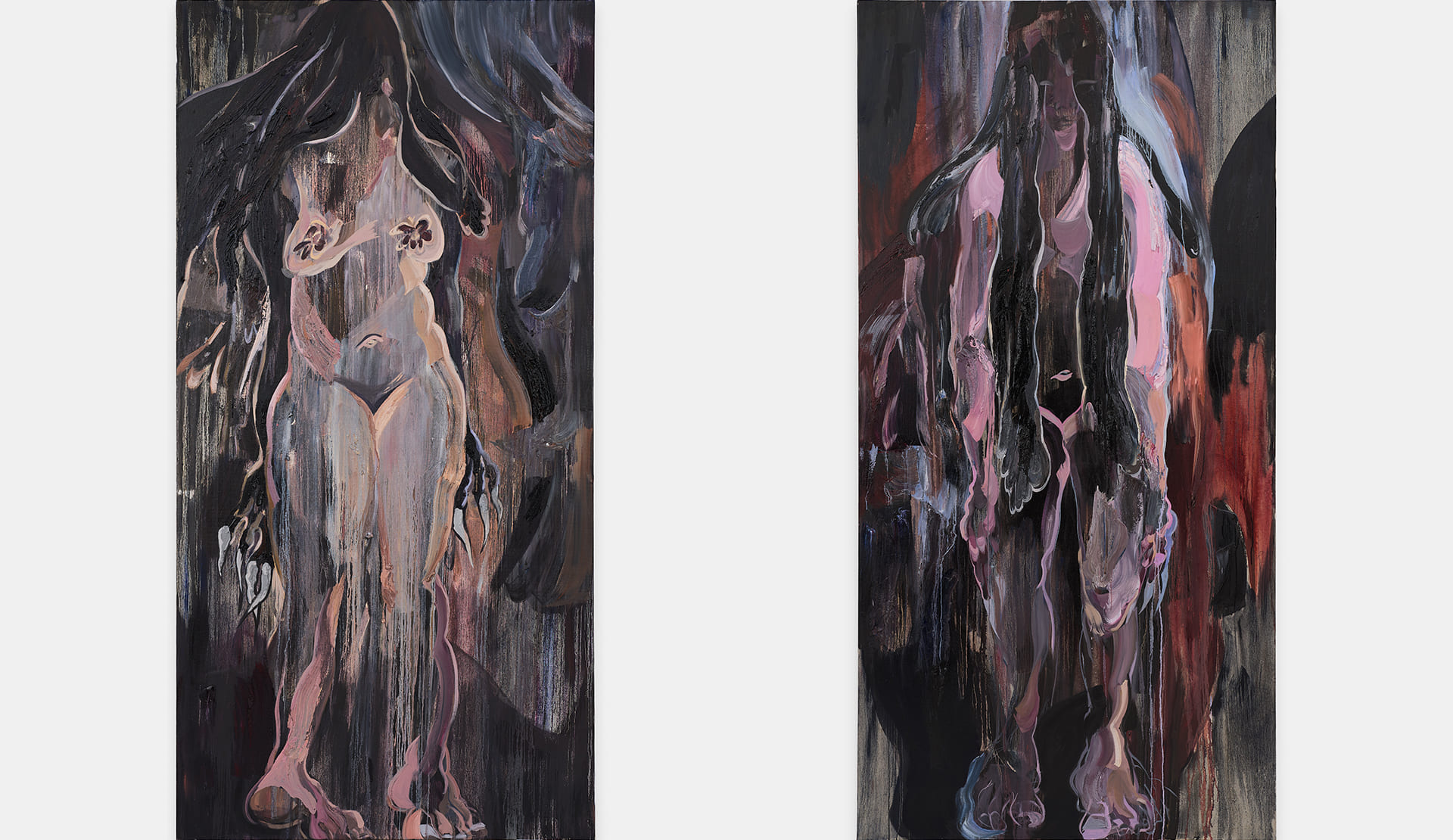
Witness III, 2025, oil on canvas, 267 × 133 cm.
Witness IV, 2025, oil on canvas, 267 × 133 cm.
Berlín, 2025